
Valdosta Center Release Paths
Valdosta Transitional Center belongs to the Georgia Department of Corrections. Its residents remain in state custody while they take part in structured reentry activity. A resident can later move to parole, reach sentence completion, transfer within GDC, or leave under another state-approved supervision plan. The state offender record is therefore the primary source for whether GDC still reports incarceration.
A parole move is conditional release under supervision. A sentence discharge means the correctional authority tied to the sentence has ended. Transfer means the person changed facilities or authorities and may remain in custody. These outcomes should not be collapsed into a single word. A state record marked inactive can indicate that GDC no longer reports current incarceration, but the Parolee Database and DCS record may still show post-release supervision.
The Lowndes County Jail roster does not track Valdosta Transitional Center residents. County bond records also do not establish a center discharge. Use the Lowndes County custody map to distinguish the systems, then remain with GDC, the Parole Board, and DCS for this facility.
Search Valdosta Center Records
The GDC offender search supports name, GDC ID, and case-number searches. For a person believed to have left state custody, select inactive records or both active and inactive records. The descriptive form can be narrowed by Most Recent Institution. Choose Valdosta TC when that filter matches the known history. Also compare conviction county, offense, age, and physical traits to avoid a same-name error.
- Open the GDC public offender query and read its disclaimer.
- Select inactive records or both active and inactive records.
- Search by full name, GDC ID, or case number.
- Use Valdosta TC as the institution filter when helpful.
- Open the matching record after comparing identifying details.
- Read status, sentence, institution, and release-related fields together.
- Check parole and DCS tools when supervision may follow release.
GDC includes statewide filters for Released In The Past 15 Days and Max Prison Term Ending Next 15 Days. These can narrow state release research, but they do not form a Lowndes County release feed. A person can leave Valdosta Transitional Center without appearing in any county jail release list because the center's custody data is state data.
Valdosta Transitional Release Fields
The individual GDC record may provide identifying, institution, sentence, photo, and release information. Availability varies. GDC warns that its public service is for convenience and tells users to verify the information in writing before treating it as factual and complete.
| Field | How to read it |
|---|---|
| Active or inactive | Whether GDC reports current incarceration. |
| Most recent institution | The latest listed GDC facility history, such as Valdosta TC. |
| Maximum release data | Sentence-end context, not the same as parole approval. |
| GDC ID | The unique state identifier used to confirm the record. |
| Case and offense data | Details that help distinguish people and sentences. |
| Photograph | A state offender image shown when available. |
A Maximum Release Date, or MRD, is tied to sentence expiration and applicable credits. A Tentative Parole Month, or TPM, is the month in which the Parole Board expects final review. The TPM can be changed or canceled and does not guarantee departure from the center. A final parole record and DCS supervision record provide the post-release layer.
Valdosta Center Parole Status
The Georgia State Board of Pardons and Paroles makes parole decisions. Its Inmate TPM Lookup applies while a person is still under correctional custody and being considered. Its Parolee Database applies after a parole release. The Board may set, postpone, or cancel a TPM, deny parole, establish conditions, or withdraw a grant before the effective date. Good conduct and required program completion can affect final review.
Once a person is released to parole or felony probation in Lowndes County, the DCS Valdosta field office is the local state supervision office. It serves Lowndes, Brooks, Echols, and the Southern Circuit. DCS confirms supervision context, not the date on which the center completed release processing.
- Parole
- Conditional release from state custody under DCS supervision.
- Probation
- Court-ordered community supervision, distinct from a parole decision.
- TPM
- A tentative review month that is not a final release date.
- Discharge
- The end of sentence or correctional authority.
Valdosta Center Contact Record
GDC lists Valdosta Transitional Center at its Valdosta address, but the public location page bundles its contact block under Valdosta State Prison. That detail is important when seeking a release record. Callers may not see a separate center records line on the location page. Use the GDC offender search first and route formal status verification through GDC Inmate Records and Information.
363 Gill Harbin Industrial Blvd.
Valdosta, GA 31601
GDC facility information phone: 229-293-6280
Valdosta State Prison contact
Phone: 229-333-7900
Mail: PO Box 5368, Valdosta, GA 31603
PO Box 1529
Forsyth, GA 31029
Provide the person's full name, GDC ID, and the exact status or release field that needs confirmation. A request to GDC avoids routing a state transitional-center record through county sheriff channels that did not create it.
Valdosta Center Reentry Role
The official GDC location page classifies the site as a transitional center serving adult male felons. Transitional centers are part of the state correctional system. Residence there can occur near parole or sentence completion, but placement at the center does not itself prove that release has been approved or set for a fixed day.
GDC's broader reentry material describes residents living at a center while taking part in structured programs and work-related transition. Residents are commonly released on parole or, when parole does not apply, after the sentence has been fulfilled. The sequence is still controlled by the offender record, sentence, and parole decision.
The center has no sourced capacity figure in the research, so none should be inferred. Its key public facts are the state operating agency, adult male offender population, Valdosta location, and transitional role. These facts distinguish it from both a close-security prison and the county jail.
Work and program activity can be part of preparation for community return, yet the resident remains under GDC authority until the approved custody change takes effect. A proposed address or outside assignment is not proof of discharge. Before relying on word that a resident has left, compare the individual GDC record with the parole result and any DCS supervision listing. That three-part check separates planning from an actual release event.
Valdosta Release Credit Rules
Georgia's Performance Incentive Credit program can affect eligible state offenders. GDC says a person can earn up to twelve points and potentially receive one to twelve months off either a TPM or MRD. Points can come from case planning, education or vocational progress, and work or detail assignments. The program excludes several groups, including life sentences, short sentences of two years or less, death sentences, and non-parole-eligible or minimum-mandatory offenses.
The official GDC Performance Incentive Credit page is shown below.
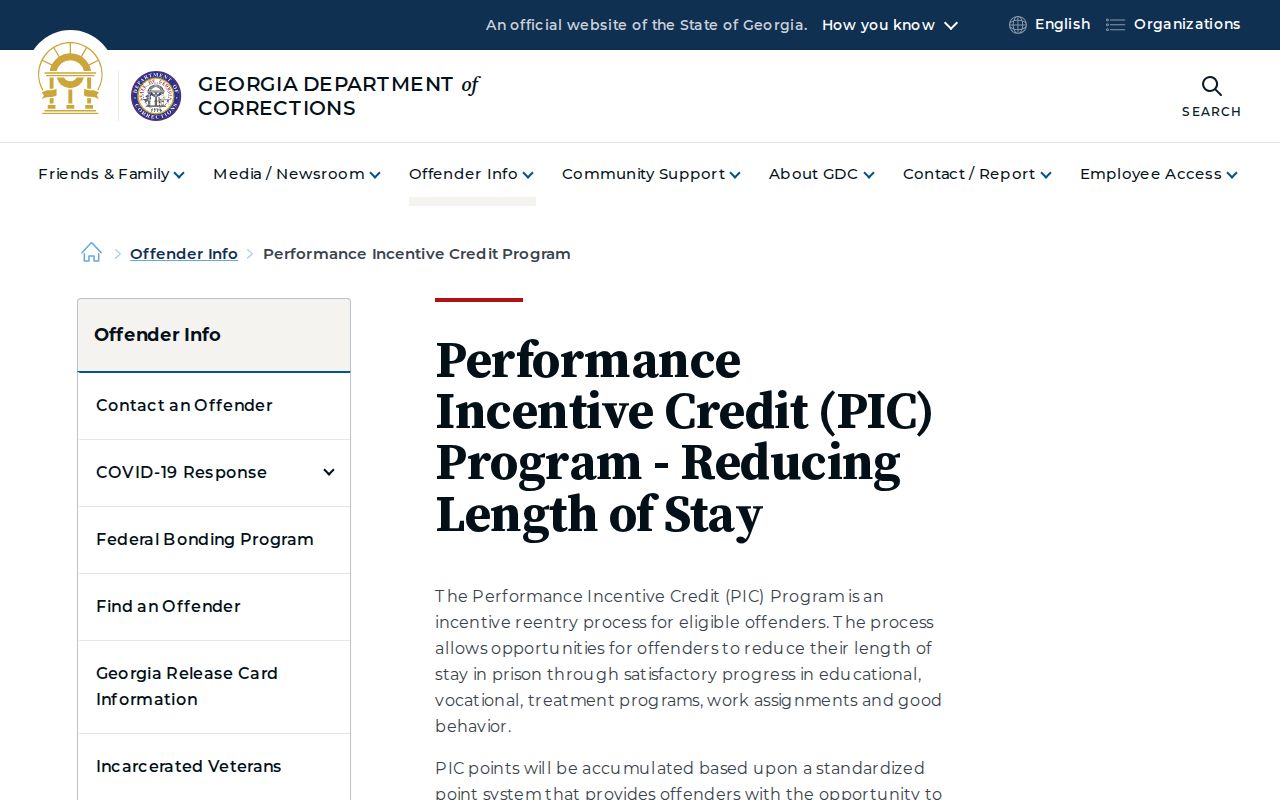
PIC is a state release-date factor. It does not create a county jail good-time rule and should not be used to calculate a Valdosta center release without the offender's official state record.
Valdosta DCS Release Supervision
DCS takes on the field-supervision role after a qualifying parole or felony probation release. The distinction matters at a transitional center because a person can move from structured state custody into structured community supervision. Leaving the center does not mean that reporting duties have ended.
The DCS adult felony supervision source provides the official post-release context shown below.
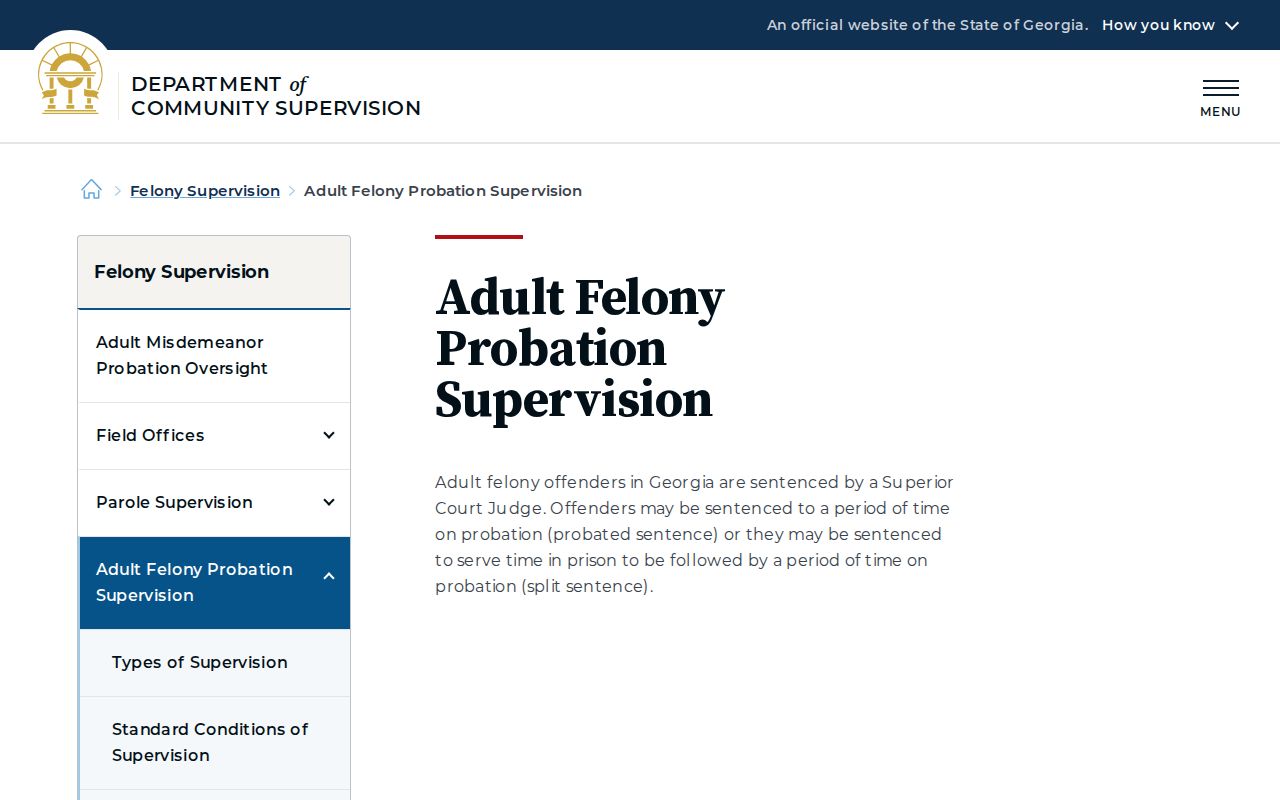
Use DCS to confirm the supervision setting after release. Use GDC and the Parole Board to confirm the custody exit and parole decision that came first.
A DCS match answers whether state field supervision is reported after the custody phase. It does not show every detail of the center's release processing. No DCS match can also be consistent with full sentence discharge or with a different destination. Begin with the state offender identity, check the Board only where parole applies, and use the DCS office for the local reporting layer. This ordered approach avoids treating supervision as the original release record.
Valdosta Facility Release Difference
Valdosta State Prison is the area's close-security state-prison anchor, while Valdosta Transitional Center has a reentry-focused state role. GDC lists the prison for adult male felons with a capacity of 1,312 and paired construction and opening dates for its complex. Those facts belong to the prison, not the center. The separate GDC Lowndes County Jail location profile classifies that facility as a county jail, further confirming that the center and prison remain state-custody institutions with different records.
A person moving from the prison to the center has transferred within the state system and has not yet been released merely because the facility name changed. A later move from the center may be parole, sentence discharge, or another transfer. Both locations use GDC, Parole Board, and DCS sources, but the individual institution history must be read in order. The Valdosta State Prison release record describes the close-security path separately.
Valdosta Center Detainer Transfers
A resident can leave Valdosta Transitional Center under a transfer or detainer rather than a community release. The Parole Board may parole a person to a detainer, which means another authority receives the person. Verify the GDC departure, read the parole outcome, and then consult the receiving authority.
Lowndes County's sheriff publishes quarterly CATRA reports. That local feature does not make Valdosta Transitional Center an ICE detention center. It also does not track center releases. The CATRA report page is relevant only as background for why immigration-related holds can create another custody step in the county.